
Investigating Swimming Effect of Holograms in Mixed Reality
This swimming effect; of the hologram directly impacts robot path planning. This paper proposed a new way for analysis of swimming effect of the hologram using robot, and compared three existing methods with spatial anchors, employing the world locking tool (WLT), and a method without spatial anchors or WLT.
Dec 7, 2024
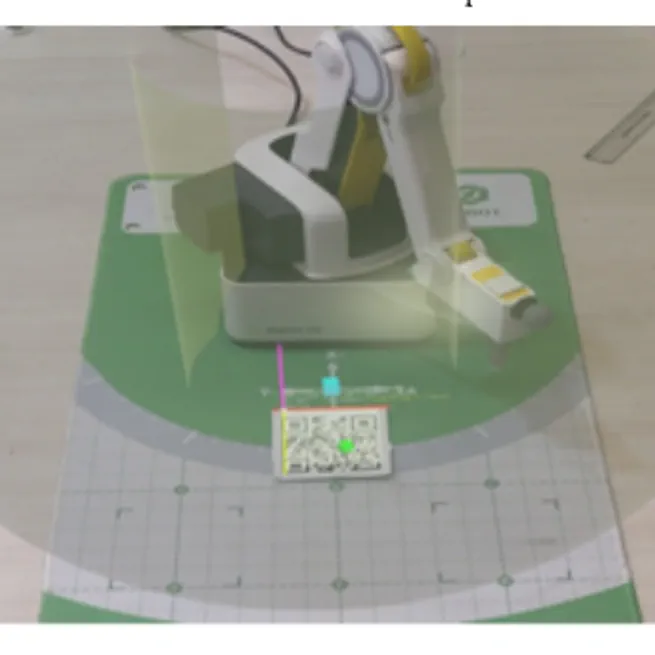
Investigating Swimming Effect of Holograms in Mixed Reality
The swimming effect of the hologram directly impacts robot path planning. This paper proposed a new way for analysis of swimming effect of the hologram using robot, and compared three existing methods with spatial anchors, employing the world locking tool (WLT), and a method without spatial anchors or WLT.
Dec 1, 2024
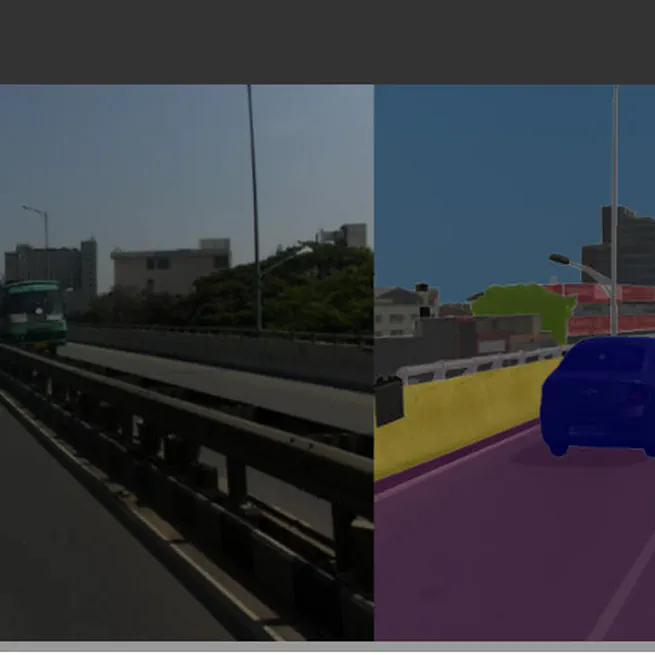
I-ROD: An Ensemble CNNs for Object Detection in Unconstrained Road Scenarios
Solving the problem of object detection in complex and unstructured environments is crucial for enhancing the safety and efficiency of autonomous system. This paper introduces a semantic segmentation model capable of accurate object detection in complex backgrounds by integrating multiple Convolutional Neural Networks (CNNs). The system incorporates two distinct types of segmentation models, an encoder-decoder architecture for acquiring abstract feature representations and a dilated convolutional branch to tackle variations in object sizes. The model employs a dynamic fusion mechanism based on confidence scores from each branch, allowing it to adapt to varying and dynamic situations.
Sep 1, 2024
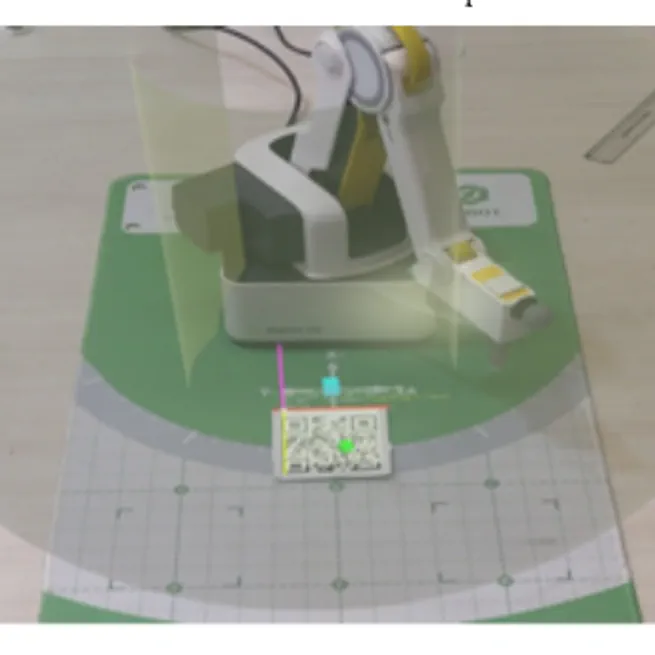
Investigating Swimming Effect of Holograms in Mixed Reality
This paper proposed a new way for analysis of swimming effect of the hologram using robot, and compared three existing methods with spatial anchors, employing the world locking tool (WLT), and a method without spatial anchors or WLT.
Aug 1, 2024
Harnessing Learn Rate Schedule for Adaptive Deep Learning in LoRaWAN-IoT Localization
This paper implements a learn rate schedule mechanism and hybrid learn rate schedule mechanism like piecewise, exponential decay, polynomial time, reciprocal time and cosine annealing decay as adaptive learning rate mechanisms for DL models and optimizers like Adadelta, Adam, RMSprop and Stochastic Gradient Descent with Momentum (SGDM) to improve the accuracy of Received Signal Strength Indicator (RSSI)-based localization in LoRaWAN (Long Range Wide Area Networks) based Internet of Things (IoT) networks.
May 1, 2024
IoT-enhanced Extensible Messaging Presence Protocol:A Multiple Multicast Architecture for Diverse Applications
A mathematical formula is devised to optimize latency and bandwidth, subject to constraints during message passing down the logical tree. Pseudo code and algorithms on message transmission by a publisher and various other cases, such as subscriber management and changing the cluster head, are discussed. A diverse set of example cases are presented that can use multiple multicast for XMPP-based applications. The basic version of this work was presented in INCET 2022 Conference.
May 1, 2023
Multiple Multicast Architecture for XMPP based Applications
a novel architecture to extend XMPP for multiple multicast has been proposed to cater multiple multicast in a publish subscribe network.
Sep 1, 2022